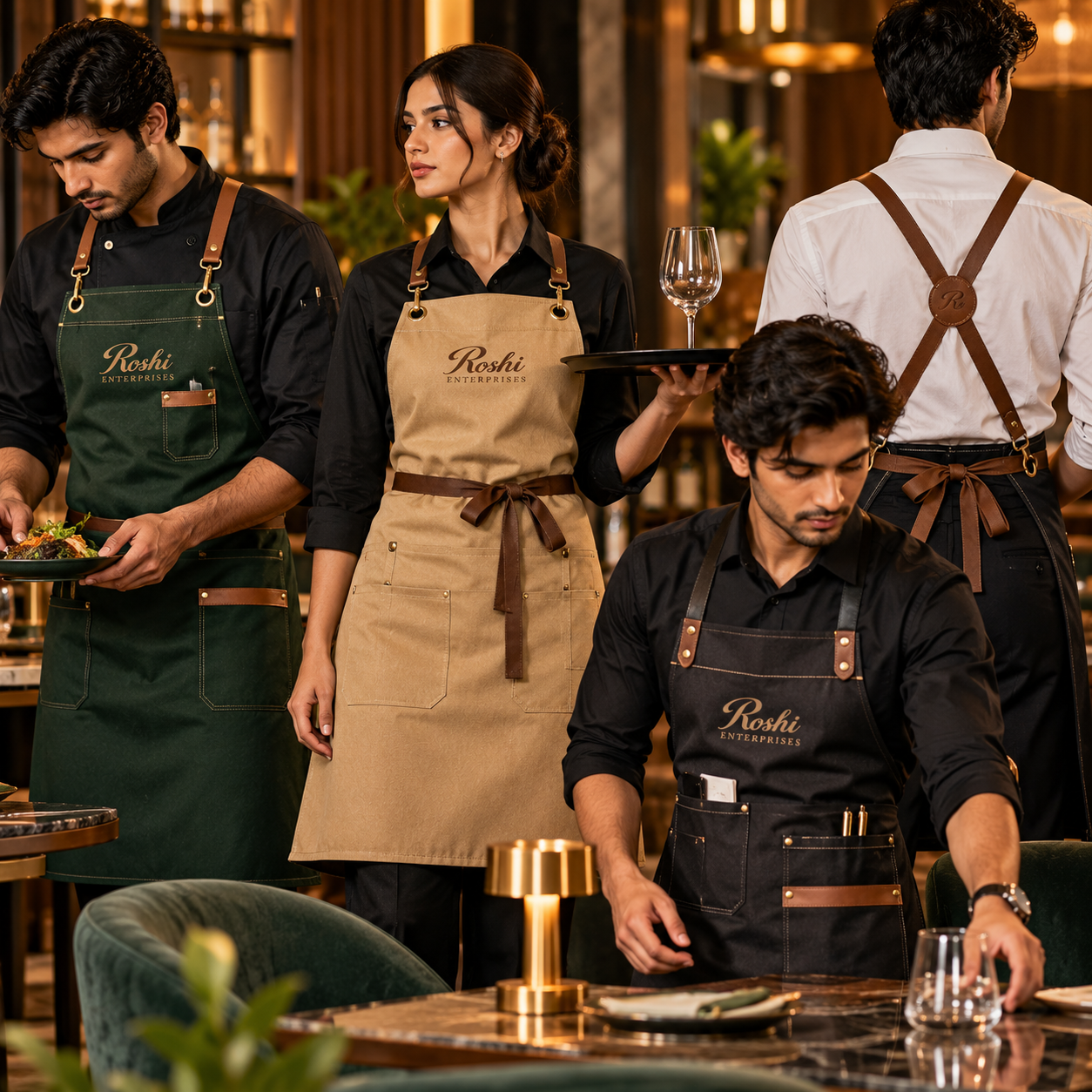
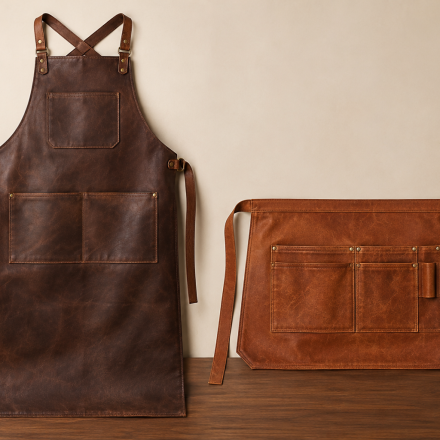
Uniforms play an important role in how customers perceive a restaurant, café, bar or hotel.
While shirts, trousers and jackets usually form the foundation of a hospitality uniform, one accessory can have an especially strong visual impact: the apron.
A well-designed apron does more than protect clothing. It can help employees look organized, reinforce the establishment’s branding and provide practical storage for items staff use throughout their shifts.
For businesses considering custom aprons for restaurants, cafés or hotels, choosing the right product requires looking beyond appearance.
Material, apron style, comfort, pockets, straps, branding and durability should all be considered before placing a bulk order.
Here are the most important factors to evaluate.
1. Choose an Apron Based on How It Will Be Used
The first question shouldn’t be Which apron looks best?
It should be:
Who will wear it and what will they be doing?
A waiter working on the restaurant floor has different requirements from a bartender, barista or chef.
For example, restaurant service staff may need easy access to:
- Order pads
- Pens
- Mobile POS devices
- Bottle openers
- Small towels
- Guest bills or receipts
A barista may require additional protection against spills, while staff working at a luxury restaurant may prioritize a more formal appearance.
Understanding the actual job helps determine the correct apron design.
2. Select the Right Apron Style
There are several apron styles commonly used in hospitality.
Full-Length Aprons
Full-length aprons provide coverage across both the torso and lower body.
They can work well for cafés, restaurants, bakeries and other environments where staff regularly handle food or beverages.
Waist Aprons
Waist aprons are tied around the waist and leave the upper body uncovered.
They’re particularly useful for waiters and service staff who primarily need convenient pockets rather than full clothing protection.
Cross-Back Aprons
Instead of placing the weight around the neck, cross-back designs use straps that cross behind the wearer.
They can also create a distinctive modern appearance suitable for cafés, bars and contemporary restaurants.
Bib Aprons
The traditional bib apron covers the chest and extends below the waist.
Its simple design makes it suitable for a wide range of hospitality environments.
The correct choice depends on both function and brand style.
3. Consider the Material Carefully
Material affects comfort, appearance, maintenance and durability.
Hospitality businesses may choose fabric-based aprons, leather details, PU leather elements or combinations of different materials depending on the application.
Fabric Aprons
Fabric can provide a lightweight and flexible option for everyday restaurant use.
Different colours can also be selected to coordinate with staff uniforms and interior branding.
Leather Aprons
Leather can create a distinctive premium appearance.
It may suit certain cafés, bars, open kitchens or hospitality concepts where a rugged or handcrafted aesthetic complements the interior.
PU Leather Aprons and Details
PU leather can provide a leather-inspired appearance while offering consistent colours and textures.
Some apron designs also combine fabric bodies with PU or leather-look straps, pockets and detailing.
This can provide visual character without requiring the entire apron to be manufactured from the same material.
4. Comfort Matters More Than It Seems
An apron may look fantastic in a product photograph but become uncomfortable after several hours of continuous use.
Hospitality employees may wear their aprons throughout an entire shift.
Consider factors such as:
Weight: An unnecessarily heavy apron can become uncomfortable.
Strap placement: Straps should distribute weight appropriately.
Adjustability: Adjustable straps allow the same design to accommodate different employees.
Movement: Staff should be able to walk, reach and bend comfortably.
When possible, testing a sample with actual staff before ordering a large quantity can reveal practical issues that aren’t obvious from photographs.
5. Add Useful Pockets
Pockets can transform an apron from a uniform accessory into a practical working tool.
However, more pockets aren’t automatically better.
The layout should reflect what employees actually carry.
A waiter apron, for example, could include:
- Large central pocket
- Dedicated pen compartment
- Small receipt pocket
- Mobile/POS pocket
A bartender might require a different configuration.
When ordering custom waiter aprons, discuss the required pocket dimensions and positioning rather than simply accepting a generic layout.
6. Incorporate Your Restaurant’s Branding
Custom manufacturing allows the apron to become part of the restaurant’s visual identity.
A restaurant logo can potentially be added using embroidery, printing, patches, embossing on leather elements or other techniques depending on the material.
Logo placement also matters.
Common locations include:
- Upper chest
- Front pocket
- Lower corner
- Leather patch
- Strap detailing
For premium establishments, subtle branding can often look more sophisticated than an oversized logo.
The objective is to make the uniform recognizable without turning employees into walking advertisements.
7. Match Aprons With the Restaurant’s Interior
Brand consistency shouldn’t stop at the logo.
Consider the colours, textures and materials already present inside the establishment.
Imagine a restaurant using:
Dark green + tan leather + gold branding
Those same elements could appear across several customer touchpoints:
Staff Aprons → Menu Folders → Coasters → Bill Presenters
Instead of looking like products purchased independently, everything begins to feel like part of one deliberately designed brand.
Restaurants developing their tabletop presentation can also read our guide on [choosing custom menu folders for restaurants].
8. Coordinate Aprons With Other Hospitality Products
Uniforms are only one component of the guest experience.
A stronger visual identity can be created when staff accessories and tabletop products follow the same design language.
For example, a restaurant could use:
- Brown apron straps
- Brown PU menu folders
- Matching brown coasters
- Matching bill presenters
- Gold logo detailing across each product
Your apron therefore doesn’t necessarily need to be designed independently.
If you’re developing several products at once, ask whether colours and materials can be coordinated.
Restaurants can also explore our guide to [custom coasters for restaurants and hotels] when planning a matching tabletop collection.
9. Think About Maintenance
Restaurant uniforms are exposed to demanding conditions.
Food, beverages, oils and regular handling can affect an apron over time.
Before approving a material, ask how it should be cleaned and maintained.
Consider:
- Whether the apron is washable
- Whether leather components require separate care
- How quickly the material dries
- Whether colour may fade
- Whether hardware can withstand repeated use
The easiest product to maintain may ultimately be more useful than the product that looks best when brand new.
10. Check the Hardware and Stitching
Small construction details can have a significant impact on durability.
When evaluating a sample, inspect:
Stitching: It should appear consistent, particularly around pockets and stress points.
Buckles: Adjustable hardware should operate smoothly.
Rivets: Decorative or structural rivets should feel secure.
Straps: Check where straps connect to the apron.
Pocket edges: These areas can receive significant repeated stress.
These details become particularly important when aprons are being used daily in a busy restaurant.
11. Consider Different Roles Within the Same Restaurant
Not every employee necessarily needs exactly the same apron.
A restaurant could create related variations for different teams.
For example:
Waiters: Waist or lightweight bib aprons with order-pad pockets.
Bartenders: Darker full aprons with multiple utility pockets.
Baristas: Cross-back aprons with reinforced front pockets.
Supervisors: Similar design with subtle colour or material differences.
Maintaining the same overall design language keeps the staff looking coordinated while allowing each role to have appropriate functionality.
12. Order a Sample Before Bulk Production
For larger customized orders, sampling is especially useful.
A physical sample allows you to test the apron under real working conditions.
Check:
- Material quality
- Actual colour
- Logo size and position
- Strap comfort
- Pocket dimensions
- Stitching
- Hardware
- Overall fit
- Ease of movement
Ideally, have a staff member wear the sample during normal work rather than evaluating it only on a table.
13. What to Send When Requesting a Quote
Providing detailed requirements can help a manufacturer understand the project and quote more accurately.
When requesting custom aprons for restaurants, provide:
Quantity: Number of aprons required.
Apron style: Bib, waist, cross-back or another design.
Material: Preferred fabric, leather, PU or combination.
Colour: Required body and strap colours.
Dimensions: Standard or custom sizing requirements.
Pockets: Number, dimensions and positioning.
Logo: High-quality artwork where possible.
Branding: Printing, embroidery, patch or another preferred method.
Hardware: Any specific buckles, rivets or fittings.
Delivery location: Destination for the completed order.
If you’re unsure about some specifications, share reference photographs and explain how the apron will be used.
Custom Hospitality Aprons from Roshi Enterprises
Roshi Enterprises provides customized products for restaurants, hotels, cafés and other hospitality businesses.
Custom hospitality aprons can be developed according to a business’s preferred design, material, colours, branding and functional requirements.
Businesses creating a coordinated hospitality collection can also combine aprons with customized menu folders, bill presenters, coasters and other restaurant accessories.
For bulk requirements, share your required quantity, design reference, logo, preferred material and customization requirements to discuss suitable options and request a quotation.
Frequently Asked Questions
Can restaurant aprons be customized with a logo?
Yes. Depending on the apron material and design, logos can potentially be applied through embroidery, printing, branded patches or other suitable customization methods.
Which apron style is best for restaurant waiters?
Waist aprons and bib aprons are both common choices. The best option depends on the uniform style and what employees need to carry during service.
Can apron pockets be customized?
Yes. For customized production, pocket quantity, size and placement can be designed around the intended use.
Can restaurant aprons match menu folders and other accessories?
Yes. Using coordinated colours, materials and branding across aprons, menu folders, coasters and bill presenters can create a more consistent hospitality identity.
Can restaurants order custom aprons in bulk?
Yes. Bulk custom orders can be manufactured according to the required quantity, materials, dimensions and branding specifications.